
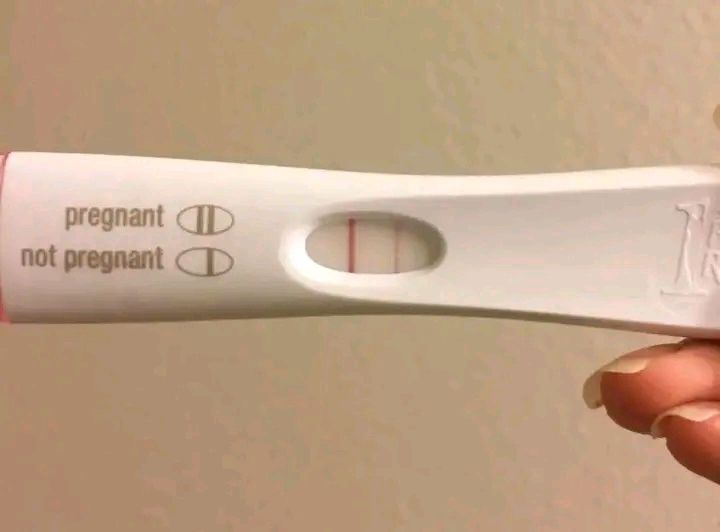
Few years ago, a British man tested positive when he peed on a pregnancy test kit, a man uses a pregnancy test as a joke, sees a positive result, and later discovers he has testicular cancer. While it sounds like an legend, there is a biological basis for this phenomenon. Home pregnancy tests detect Human Chorionic Gonadotropin (hCG), a hormone produced by the placenta during pregnancy. However, certain types of germ cell tumors, specifically those found in the testes, also secrete this hormone. While a pregnancy test is never a reliable or recommended screening tool for men, a positive result in a male indicates a clear red flag and need for immediate medical evaluation.
Understanding Testicular Cancer and Germ Cell Origins
Testicular cancer primarily affects the testes, the male reproductive glands responsible for producing sperm and testosterone. According to the American Cancer Society, this malignancy is relatively rare, yet it remains the most common cancer diagnosed in young men aged 15 to 40. Most cases begin in germ cells, which are the cells that produce immature sperm.
Medical professionals categorize these into two main types: seminomas and non-seminomas. Seminomas tend to grow more slowly and are highly sensitive to radiation therapy. Non-seminomas often grow more rapidly and consist of different cell types, including embryonal carcinoma, yolk sac carcinoma, and choriocarcinoma. It is specifically the choriocarcinoma component that produces the hCG hormone detected by pregnancy tests.
Risk Factors and Genetic Predispositions
The exact cause of testicular cancer remains unknown, but several factors increase the probability of development. Cryptorchidism, or undescended testes, is the most notable risk factor. Even if a surgical correction occurs in childhood, the risk remains higher than in the general population. Research from the Mayo Clinic (2024) indicates that men with a family history of the disease, particularly a father or brother, face an elevated risk.
Race and ethnicity also play a role, with Caucasian men being several times more likely to develop the disease than Black or Asian men. It is also good to note that a previous diagnosis of Carcinoma In Situ (CIS), where abnormal cells are present but have not yet spread, serves as a precursor to invasive cancer.
Identifying Early Signs and Symptoms
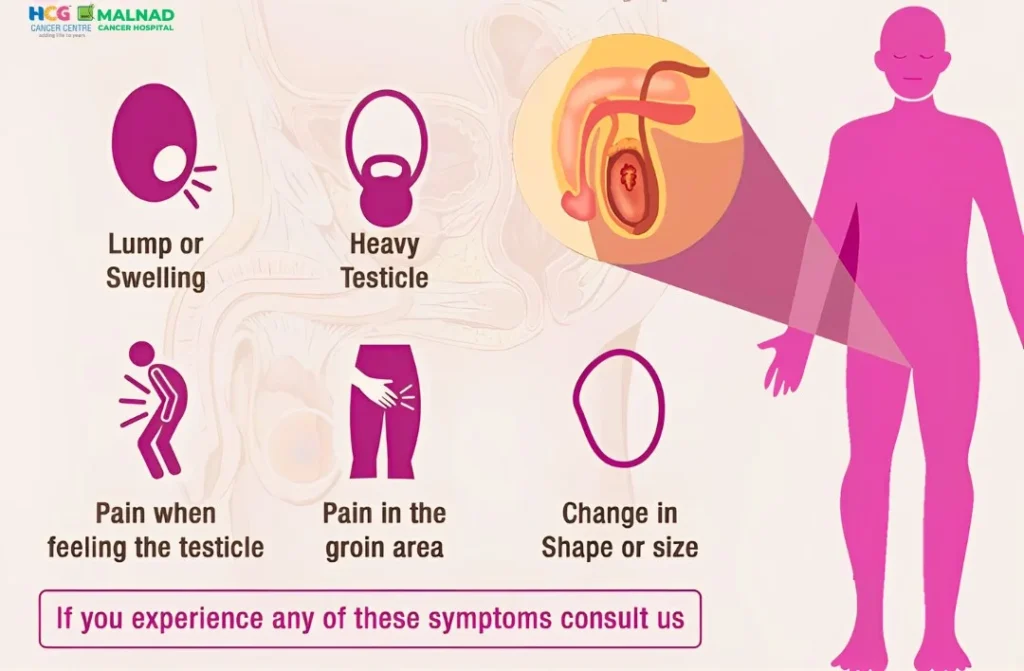
Early detection is the primary factor in the high cure rate of testicular cancer. In the initial stages, the disease often presents as a painless lump or swelling in one of the testicles. Men might notice a change in how the testicle feels or a sudden collection of fluid in the scrotum, known as a hydrocele. A feeling of heaviness or a dull ache in the lower abdomen or groin area is also a common early indicator.
It is important to note that many lumps are not cancerous; they may be cysts or varicoceles. However, any new mass requires a professional physical examination and often an ultrasound to differentiate between benign and malignant tissue.
Progression to Late Signs and Symptoms
If the cancer metastasizes, or spreads beyond the testes, secondary symptoms emerge depending on the location of the new growth. The National Cancer Institute notes that common sites for spread include the lymph nodes in the back and the lungs.
- Persistent lower back pain caused by enlarged lymph nodes pressing against nerves or muscles.
- Shortness of breath, chest pain, or a chronic cough if the cancer reaches the lungs.
- Swelling of one or both legs due to blood clots, known as deep vein thrombosis.
- Gynecomastia, or the enlargement of breast tissue, occurs when certain tumors release hormones that disrupt the male hormonal balance.
Knowing the early signs and symptoms of testicular cancer is important for early detection and care, however, just like Self breast examination, Self examination places a pivotal role in detection of testicular lumps and diagnosis of Testicular CA. Below we will describe a systematic way for testicular self examination.
The Methodology of Self-Examination
Health practitioners recommend a Testicular Self-Exam (TSE) once a month to establish a baseline for what is normal. The best time to perform this is during or after a warm bath or shower when the scrotal skin is relaxed.
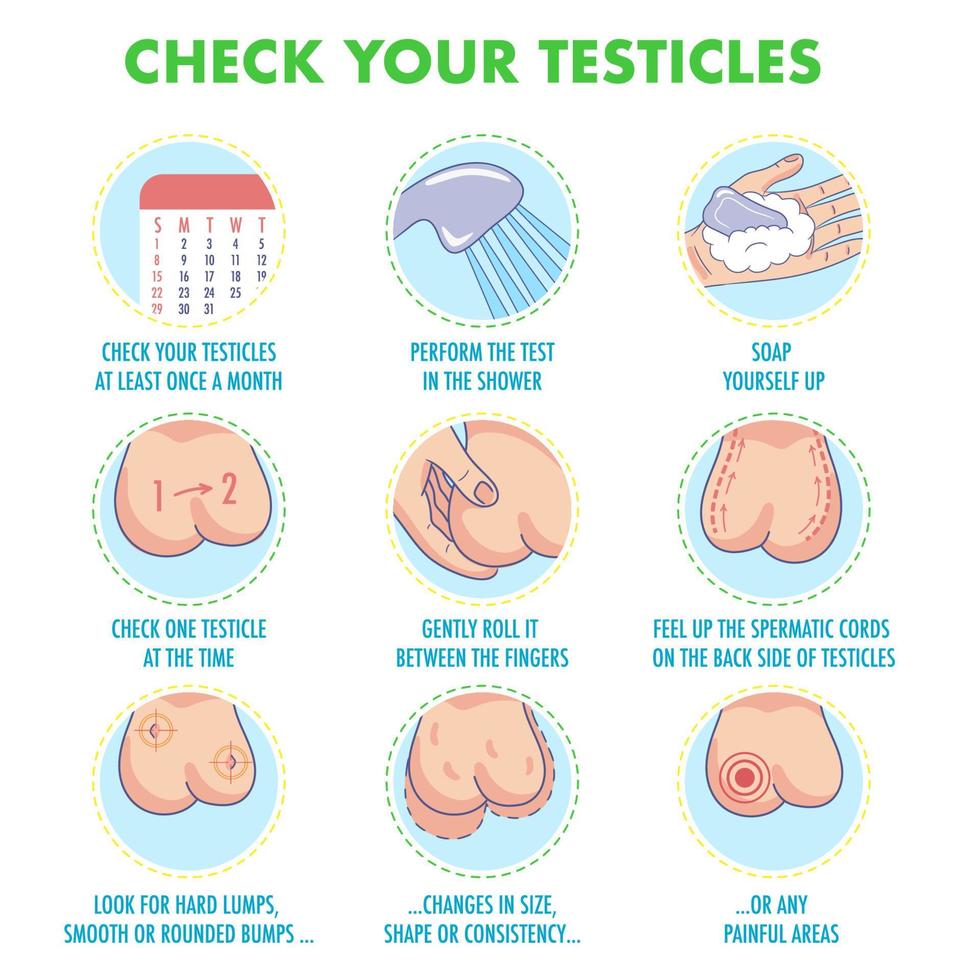
- Hold one testicle at a time between the thumbs and fingers of both hands.
- Roll it gently between the fingers to feel for any hard lumps, smooth rounded bumps, or changes in size and shape.
- Locate the epididymis, the soft, tube-like structure behind the testicle, so as not to mistake it for a suspicious lump.
- Compare both testicles to check for symmetry, though it is normal for one to be slightly larger than the other.
Immediate Actions Following a Suspicious Finding
If a man discovers a lump or experiences persistent groin pain, the first step is to schedule an appointment with a primary care physician or a urologist. Do not wait for the symptoms to resolve on their own. The doctor will likely perform a physical exam and order a scrotal ultrasound, which uses sound waves to create images of the internal structures.
Blood tests are also vital. These tests look for tumor markers such as Alpha-Fetoprotein (AFP), Lactate Dehydrogenase (LDH), and the previously mentioned hCG. While these markers help in diagnosis and staging, a definitive diagnosis usually requires the surgical removal of the affected testis, a procedure called a radical inguinal orchiectomy.
Now you have learnt the symptom, risk factors and how to do a Self Testicular examination, it is important to teach it to the men in your life, as it could be enough to save their lifes.
Frequently Asked Questions
Does a positive pregnancy test always mean a man has cancer?
No. While some testicular cancers produce hCG, many do not. Conversely, other medical conditions or certain medications can cause a false positive result. A pregnancy test is not a validated diagnostic tool for men.
Is testicular cancer curable?
Yes, it is one of the most treatable forms of cancer. According to the Cleveland Clinic , the five-year survival rate is over 95% when the cancer is localized. Even in cases where it has spread, modern chemotherapy and surgery provide high success rates.
Does having an undescended testicle as a baby mean I will get cancer?
It increases the risk, but it does not guarantee a diagnosis. Most men who had cryptorchidism never develop testicular cancer. However, they should be more diligent with monthly self-exams.
Can testicular cancer affect fertility?
The cancer itself and treatments like chemotherapy or surgery can impact sperm production. Men who wish to have children in the future should discuss sperm banking with their oncologist before starting treatment.
Is there a specific age when the risk stops?
While most common in younger men, testicular cancer can occur at any age, including in children and elderly men. Vigilance remains important throughout adulthood.
