Baba Tunde was serving pounded yam to his grandchildren when the spoon slipped from his right hand. His mouth drooped on one side and his words came out slurred. By the time his son got him to a hospital in Ibadan, nearly three hours had passed. He survived the stroke. What his family had not prepared for was that surviving would only be the first step of a much longer road called stroke recovery.
Across sub-Saharan Africa, that road is harder to travel than almost anywhere else. Research from Nigeria’s long-running CogFAST stroke study puts the region’s stroke incidence at up to 316 cases per 100,000 people each year, with case fatality rates that are the highest recorded anywhere, reaching up to 84 percent within three years of a first stroke. For those who do survive, close to half live with some lasting disability, which turns stroke recovery into a family project rather than a private medical matter.
What a stroke does to the brain
A stroke happens when blood supply to part of the brain is cut off, either by a blocked artery (an ischaemic stroke, the more common type) or a burst blood vessel (a haemorrhagic stroke). Deprived of oxygen, brain cells begin to die within minutes. Which functions are affected, whether movement, speech, swallowing, memory, or vision, depends on which region was starved of blood.
Recognising a stroke early: the FAST signs
Every minute a stroke goes untreated, more brain tissue is lost. Health workers worldwide use the FAST method to spot a stroke quickly:
- Face: does one side droop when the person smiles?
- Arms: when both arms are raised, does one drift downward?
- Speech: is it slurred or hard to understand?
- Time: if any sign appears, get to a hospital immediately and note when symptoms started.
Clot-dissolving treatment works best within four and a half hours of symptom onset. Long distances to hospitals with brain scanning equipment mean many Nigerian patients arrive well outside this window, part of why outcomes here differ so much from wealthier countries.
Why hypertension sits at the centre of Africa’s stroke crisis
The SIREN study, the largest stroke research project ever conducted in West Africa, followed more than 2,000 stroke patients across Ghana and Nigeria. It found that hypertension (high blood pressure) alone accounts for roughly 91 percent of the population-attributable risk of stroke here, far ahead of dyslipidaemia (abnormal blood fats), diabetes, and diet. The single most powerful thing a family can do to prevent a first or repeat stroke is to keep blood pressure under control. For a full breakdown of how high blood pressure damages the body over years, see our earlier guide on hypertension in young Africans.
The rehabilitation journey: what recovery actually involves
Recovery is not a single event but a process that unfolds over months. Neuroscience research points to the first three to six months as the period of fastest improvement, when healthy brain tissue reorganises to take over lost functions, a process called neuroplasticity. Gains can continue well beyond that window, though more slowly, so progress should never be assumed to stop at six months.
A full rehabilitation team typically involves:
- Physiotherapy, for strength, balance, and walking.
- Occupational therapy, to relearn daily tasks such as dressing and bathing.
- Speech and language therapy, for slurred speech or swallowing problems.
- Psychological support, for the mood and cognitive changes that often follow a stroke.
Research from University College Hospital, Ibadan, found that patients who started physiotherapy early recovered faster and left hospital sooner. Families should push for a referral as soon as the patient is medically stable rather than waiting for the doctor to raise it.
Barriers Nigerian families actually face
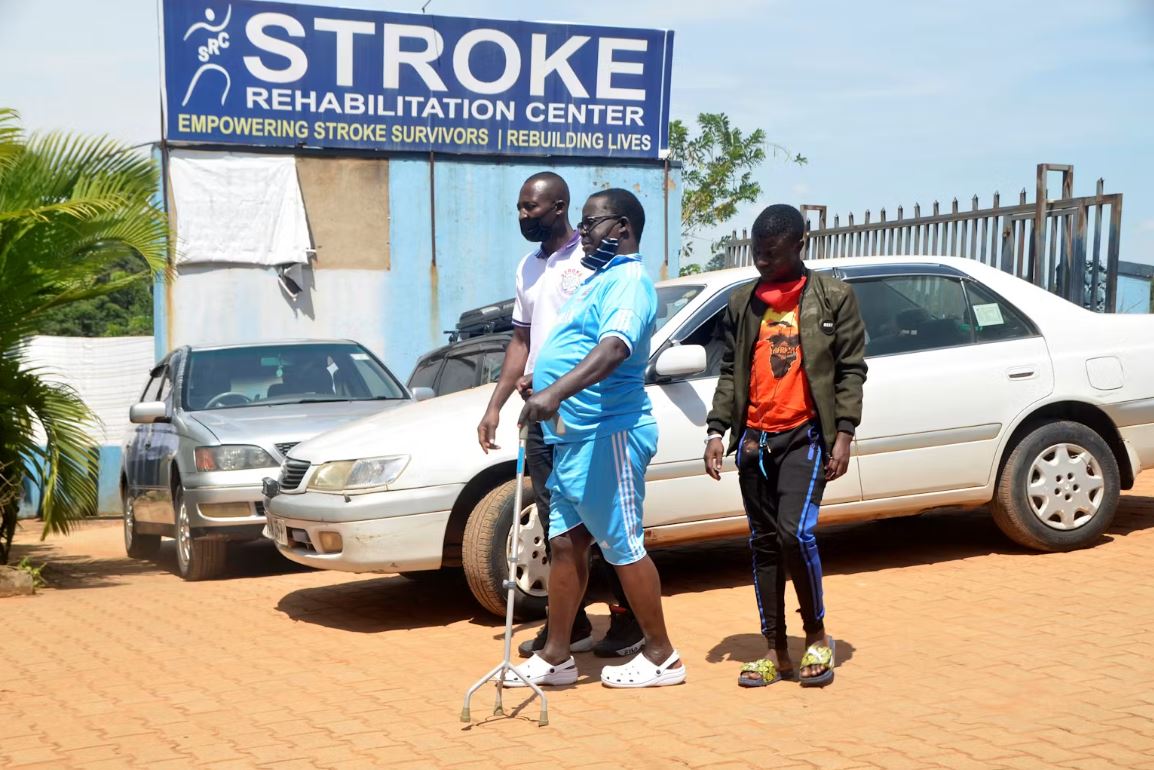
Access to coordinated rehabilitation remains patchy. In Nigeria, physiotherapy typically requires a doctor’s referral before it can begin, and a scoping review of stroke rehabilitation across the continent points to financial constraints, limited infrastructure, and stigma around disability as major obstacles outside the main teaching hospitals. Specialist centres cluster in a handful of cities, so families elsewhere often travel long distances or go without. A community reintegration study among Nigerian stroke survivors found that many struggle to return to work or resume household roles months after discharge, straining income as much as it affects self-worth.
The emotional weight nobody warns you about
Stroke does not only injure the body. Studies from Tanzania, Ghana, and Ethiopia describe survivors struggling with depression, anxiety, and fear of another stroke, alongside caregivers carrying substantial strain of their own. In some African settings, depressive symptoms affect more than half of primary caregivers, often because caregiving falls almost entirely on one family member, usually a wife or daughter, with little institutional support behind her. Naming this openly, rather than treating it as a private failure, is often the first step toward help. A counsellor, a pastoral team, or a support group of other stroke families can ease a load never meant to be carried alone.
What families can do at home
Once a survivor is discharged, daily choices at home matter as much as anything done in hospital. Steps that clinical guidelines consistently recommend include:
- Keep a home blood pressure log and share it at every clinic visit.
- Give medications at the same time daily, and never stop them without medical advice.
- Practise prescribed exercises little and often rather than in long, irregular sessions.
- Reduce salt, fried foods, and red meat, and favour vegetables, fruit, and fish.
- Encourage small daily tasks, such as buttoning a shirt, rather than doing everything for the survivor.
- Watch for low mood or withdrawal, and raise it with a doctor rather than waiting for it to pass.
This kind of home support does not replace professional care. If a survivor develops new weakness, sudden confusion, or worsening speech at any point, this needs urgent medical review rather than a wait-and-see approach at home.
Frequently asked questions
How long does stroke recovery take? There is no fixed timeline. Most improvement happens in the first three to six months, though many survivors keep regaining strength or independence for a year or longer with consistent therapy.
Can a stroke survivor fully recover? Some people recover most or all lost function, particularly after a mild stroke treated early. Others are left with lasting disability, depending on the type, size, and location of the stroke and how quickly treatment began.
Can herbal or spiritual remedies help stroke recovery? Many Nigerian families understandably turn to faith and traditional remedies alongside medical care. There is no clinical evidence that herbal preparations reverse brain damage, and some can interact dangerously with prescribed medication, so discuss any addition with the treating doctor first.
Is a second stroke preventable? Largely, yes. Controlling blood pressure, taking prescribed medication consistently, stopping smoking, and managing diabetes substantially lower the risk of a repeat stroke.
Recovery from stroke rarely follows a straight line, but with early recognition, consistent rehabilitation, and a family that plans for the months ahead rather than just the crisis itself, survivors across Nigeria regain independence every day. If someone in your family has recently had a stroke, the most useful next step is a direct conversation with their care team about a structured rehabilitation plan, not just a prescription refill.
Dr. Chimaobi Felix, MBBS Dr. Chimaobi Felix is the founder of TheHealthyAfrican.com and a medical doctor committed to making evidence-based health information accessible to readers across Nigeria and sub-Saharan Africa. He writes on non-communicable diseases, infectious disease, and preventive care, drawing on peer-reviewed research and international clinical guidelines contextualised for African healthcare realities.
** This Article has been Reviewed by Dr. Chimaobi Felix, MBBS
⚕ Medical Disclaimer
This article is for educational and informational purposes only and does not constitute medical advice, diagnosis, or treatment. Always consult a qualified healthcare provider before making any health decisions. The Healthy African is not liable for any actions taken based on the information provided on this site.