
At Irrua Specialist Teaching Hospital in Edo State, surgeons reviewing five years of emergency ulcer surgeries found something troubling. For 6 out of 10 patients, the perforation was the very first sign they had a stomach ulcer at all, and roughly 1 in 6 of those patients did not survive.
Much of the reason is cultural, not medical. Many Nigerians grow up learning that pepper, skipped meals, or “too much thinking” cause ulcers, while the two things doctors actually blame, a stomach bacterium and painkiller misuse, stay poorly understood. A review in the Nigerian Journal of Gastroenterology and Hepatology found infection rates as high as 87 percent in some Nigerian populations tested. This article separates what is known from what is simply repeated.
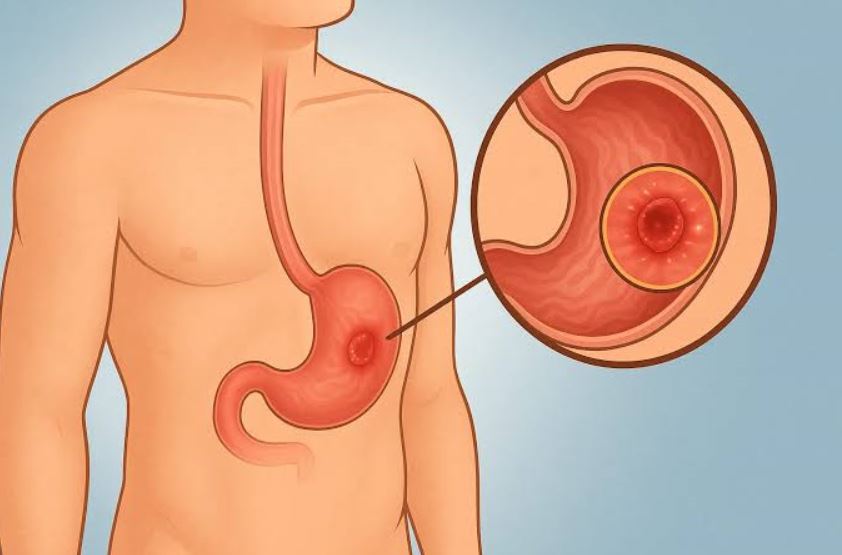
What actually causes a stomach ulcer
Peptic ulcer disease (PUD) is an open sore in the lining of the stomach or the duodenum, the first part of the small intestine, where acid damages tissue faster than the body can repair it. Doctors recognise only two well-established causes.
The first is infection with Helicobacter pylori (H. pylori), a spiral bacterium usually picked up in childhood through contaminated food, water, or close household contact where sanitation is poor. Studies from Kano, Lagos, Calabar, and Anambra have found it present in 70 to 90 percent of patients diagnosed with peptic ulcers, and the World Health Organization classifies it as a group 1 carcinogen because of its link to stomach cancer.
The second is regular use of nonsteroidal anti-inflammatory drugs (NSAIDs) such as diclofenac, ibuprofen, and aspirin. These painkillers, sold over the counter across Nigerian pharmacies, interfere with the stomach’s protective lining at high doses or with frequent use. Neither cause has anything to do with diet or meal discipline, which is where most Nigerian myths go wrong.
Myth 1: Pepper and spicy food burn holes in your stomach
This is probably Nigeria’s most repeated ulcer belief, and gastroenterologists have pushed back directly. As one University of Calabar physiology professor told PUNCH Healthwise, if pepper caused ulcers, pepper-loving communities would show the highest ulcer rates, and that pattern does not exist in clinical data.
Capsaicin, the compound behind pepper’s heat, does not burn through stomach tissue. Some research even suggests it stimulates protective mucus production rather than damaging the lining. Pepper can irritate an ulcer that already exists, worsening symptoms without ever having caused them, so avoiding it alone will not prevent or treat one.
Myth 2: Skipping meals or long fasting brings on an ulcer
Many Nigerians believe an empty stomach eats itself into an ulcer, a belief a Lagos University Teaching Hospital gastroenterologist publicly addressed, warning it leads people to self-diagnose and delay proper care. Not eating does not create the bacterial infection or drug damage that actually causes an ulcer, though long stretches without food can worsen pain in someone who already has one, and some Nigerian surgical reviews have noted it alongside perforation. Stomach pain during fasting should prompt a medical check, not a home remedy.
Myth 3: Stress alone causes an ulcer
Before H. pylori was identified in the 1980s, doctors genuinely believed stress and personality type explained most ulcers. That theory has since been replaced by clearer evidence, though the myth lingers in everyday conversation. Psychological stress does not create the tissue damage that defines an ulcer on its own, though it can raise stomach acid output and slow healing once an ulcer exists. Managing stress is good for digestive health generally, but it cannot substitute for treating the H. pylori infection or NSAID use actually driving the disease.
Myth 4: Any stomach pain means you have an ulcer
In Nigeria, “ulcer” has become a catch-all label for almost any stomach discomfort. A survey of young Nigerians cited in reporting on peptic ulcer awareness found that 64 percent believed eating on a fixed schedule could cure the condition, while only 17.3 percent knew medication was required.
Gastritis, acid reflux, gallstones, typhoid fever, and simple indigestion can all produce similar pain. Treating all of them as “ulcer” with the same home remedies leaves the real problem unaddressed, and confirming an actual ulcer needs a doctor’s assessment, not a guess based on symptoms alone.
Myth 5: Herbal concoctions can cure an ulcer for good
Traditional plant-based remedies for stomach complaints are widespread across Nigeria, and researchers have documented dozens of local plants used this way, some showing mild antiulcer activity in laboratory studies. That is a long way from a proven cure, since dosing, purity, and drug interactions are rarely tested the way pharmaceutical treatment is. Doctors treating ulcer patients in Nigeria have specifically warned against relying on unorthodox treatment instead of confirmed therapy, since it often masks symptoms just long enough for a treatable ulcer to progress into a bleed or a perforation.
How stomach ulcers are actually diagnosed and treated
A doctor can confirm H. pylori infection through a breath test, a stool antigen test, a blood antibody test, or a biopsy taken during an endoscopy, where a thin camera examines the stomach lining directly. Endoscopy also rules out gastric cancer in higher-risk patients.
Treatment usually combines a proton pump inhibitor, which lowers stomach acid, with antibiotics to clear H. pylori, typically over 10 to 14 days. Rising antibiotic resistance has complicated this in Nigeria, and updated 2024 guidelines now favour newer four-drug combinations where resistance is high. Completing the full course matters, since stopping early drives treatment failure. Anyone needing regular NSAIDs for another condition, such as arthritis, can often get a stomach-protective medicine alongside it.
When stomach pain becomes an emergency

Certain warning signs mean stomach pain should never be managed at home:
- Vomiting blood or vomit that resembles coffee grounds
- Black or tar-coloured stool
- Sudden, severe abdominal pain that comes on sharply
- Fainting, dizziness, or a rapid heartbeat alongside stomach pain
- Unexplained weight loss or difficulty swallowing
Nigerian surgical studies from Irrua, Benin City, and Port Harcourt have all recorded mortality rates between 11 and 17 percent among patients operated on for a burst ulcer, largely because care came too late. If any of these signs appear, the right response is a hospital, not a herbal mix or an extra dose of painkillers.
Frequently Asked Questions
Can a stomach ulcer heal without medicine? Rarely. If H. pylori is the cause, it will not clear on its own and the ulcer tends to return. Proper diagnosis and, where needed, antibiotic treatment give a far more reliable cure.
Is a stomach ulcer contagious? The ulcer itself is not, but the H. pylori bacterium behind most ulcers can spread through shared utensils, poor hand hygiene, or contaminated water, which is why it often clusters within families.
What foods should I avoid if I have a stomach ulcer? There is no single forbidden list, but pepper, oily meals, alcohol, and carbonated drinks commonly worsen symptoms. Avoiding your own personal triggers matters more than following a generic diet.
Does stress make ulcer symptoms worse even though it doesn’t cause the ulcer? Yes. Stress raises stomach acid and slows healing, so managing it alongside proper treatment supports recovery, even though stress alone will not create an ulcer.
How do I know if my stomach pain needs urgent medical attention? Seek emergency care immediately if you vomit blood, pass black stool, or develop sudden severe abdominal pain, since these can signal bleeding or a perforation.
A stomach ulcer treated only with home remedies for months is a pattern worth interrupting with a proper checkup. A simple test shows what is actually happening, and early treatment is far easier than recovering from a complication that could have been caught sooner.
Image alt text: A Nigerian doctor consulting with a patient holding their stomach, illustrating a checkup for suspected stomach ulcer symptoms.
Internal linking suggestion: For a full breakdown of how painkiller and antibiotic misuse fuels resistant infections, see our earlier guide on antibiotic self-medication and antimicrobial resistance in Nigeria.
About the author
Dr Chimaobi Felix, MBBS, is the founder of The Healthy African and a medical doctor dedicated to delivering evidence-based, culturally relevant health information to readers across sub-Saharan Africa. He works with a team of health professionals to translate current clinical research into practical guidance for African patients and practitioners alike.
** This Article has been Reviewed by Dr. Chimaobi Felix, MBBS
⚕ Medical Disclaimer
This article is for educational and informational purposes only and does not constitute medical advice, diagnosis, or treatment. Always consult a qualified healthcare provider before making any health decisions. The Healthy African is not liable for any actions taken based on the information provided on this site.