By Dr Chukwunyere Chimaobi | Verified June 2026 | Sources: WHO, UNODC, The Lancet, PubMed / MDPI — Antibiotics, PLOS
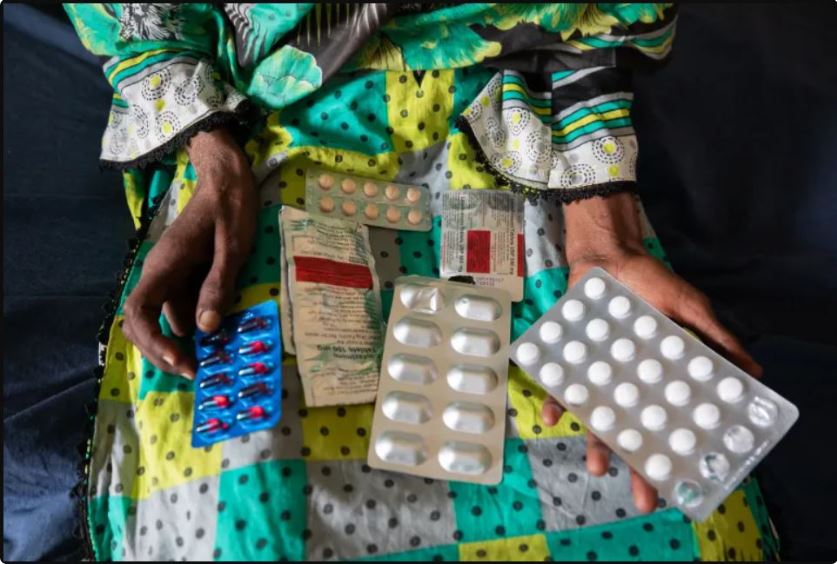
Every day in Nigeria, Ghana, Kenya, and across much of sub-Saharan Africa, people walk into patent medicine stores and roadside pharmacies with a fever, a sore throat, or a runny stomach and walk out with a strip of amoxicillin. No prescription. No clinical assessment. No follow-up. For millions of people caught between high consultation fees and distant facilities, this feels like the only practical option. But antibiotic self-medication has become one of the most pressing public health problems on the continent, and its consequences are already being counted in lives.
Antimicrobial resistance (AMR), the process by which bacteria evolve to survive the drugs designed to kill them, is accelerating faster in Africa than in almost any other region. A landmark 2022 study published in The Lancet estimated that AMR was directly responsible for 1.27 million deaths worldwide in 2019, with sub-Saharan Africa recording some of the highest mortality rates. When antibiotics fail, once-treatable infections, including pneumonia, typhoid fever, and urinary tract infections (UTIs), become difficult or impossible to cure. One of the primary drivers of this failure is unsupervised antibiotic use.
This article explains why self-medicating with antibiotics is so common across the continent, what it does to the body and to the broader community, and what practical, affordable alternatives exist for people who genuinely cannot access a doctor.
Why antibiotic self-medication is so common across Africa
The reasons are structural rather than purely behavioural. In large parts of sub-Saharan Africa, accessing a doctor means paying for a consultation, covering transport, and typically losing a day of income. For a family managing on modest earnings, buying a blister pack of amoxicillin at the nearest chemist for a fraction of that cost is not reckless. It is rational, given the choices available.
Regulatory gaps reinforce the practice. A 2020 review published in the journal Antibiotics found that between 19% and 100% of antibiotic purchases across African countries were made without a prescription, depending on the country and setting. Patent medicine vendors (PMVs) in Nigeria, chemical sellers in Ghana, and informal drug outlets in Kenya routinely dispense antibiotics based on a customer’s self-described symptoms, with no clinical assessment and no follow-up care.
Cultural familiarity compounds the problem. In many communities, specific antibiotics have become household names, passed along through word of mouth for everything from childhood diarrhoea to dental pain to presumed malaria. Amoxicillin, tetracycline, and metronidazole feel familiar and trusted. The risks that accumulate with each unsupervised course do not.
What self-medicating with antibiotics actually does to you
The danger is not that antibiotics exist. It is that they are being taken without a diagnosis, without the correct drug, and without completing the proper duration. The documented risks include:
- Treating the wrong infection entirely. Antibiotics only work against bacteria. They have no effect whatsoever on viruses, and the vast majority of common coughs, colds, and fevers are viral. Taking amoxicillin for influenza or a viral sore throat does nothing to treat the illness and disrupts the gut’s natural bacterial balance in the process.
- Creating drug-resistant bacteria. Stopping a course early, as most people do once they feel better after two or three days, leaves the hardiest bacteria alive. Those survivors reproduce and pass on their resistance. Over time, this produces strains that no longer respond to standard treatment.
- Incorrect dosing causing organ damage. Without medical guidance, people frequently take the wrong dose or the wrong frequency. Overdosing on certain antibiotics, particularly gentamicin and tetracyclines, can cause kidney or liver damage even at doses that feel modest.
- Allergic reactions that go unmanaged. Penicillin-based antibiotics, including amoxicillin and ampicillin, can trigger life-threatening allergic reactions in susceptible individuals. In a clinical setting, healthcare workers can recognise and manage these reactions. At home, a severe reaction can prove fatal before help arrives.
- Masking serious illness. Taking an antibiotic without a confirmed diagnosis can reduce fever and inflammation temporarily, concealing the signs of a serious underlying condition, such as tuberculosis (TB), bacterial meningitis, or appendicitis, long enough for it to become a medical emergency.
How antibiotic resistance spreads beyond the individual
Resistance is not a problem contained within a single body. Resistant bacteria spread through direct contact, contaminated water, shared food, and waste systems. In densely populated urban settings like Lagos, Accra, Nairobi, and Kinshasa, resistant strains move through communities with speed and efficiency.
The WHO’s Global Action Plan on Antimicrobial Resistance identifies sub-Saharan Africa as a priority region, noting that high infection burden, weak regulatory infrastructure, and limited access to diagnostics create ideal conditions for resistance to develop and spread. In practical terms, this means that when ciprofloxacin stops reliably treating UTIs in a neighbourhood, every person in that community who might one day need that drug is affected.
Nigeria’s National Action Plan on AMR, coordinated through the Nigeria Centre for Disease Control (NCDC), recognises both the regulatory and educational dimensions of the problem. Enforcement of prescription-only antibiotic sales remains inconsistent across states, but awareness among prescribers and patients is growing, and the NCDC has continued to push for stronger stewardship at the primary care level (verified June 2026).
What to do when you cannot easily see a doctor
The goal here is not to leave people without options. It is to point clearly to the options that already exist.
- Use a telemedicine service. Platforms such as Helium Health, Kangpe, and Reliance HMO in Nigeria, and similar services in Kenya and Ghana, connect patients with licensed doctors via video or chat consultation at a fraction of an in-person visit cost. A doctor can assess symptoms, rule out viral causes, and write an electronic prescription if antibiotics are genuinely warranted.
- Visit a government primary healthcare centre. Primary health care (PHC) centres offer free or subsidised consultations across most Nigerian states and in many other African countries. They are widely under-utilised, which typically means shorter waiting times than a secondary hospital.
- Request a test before a drug. For suspected typhoid, malaria, or a UTI, a simple diagnostic test, such as a rapid diagnostic test (RDT), a urine dipstick, or a full blood count, confirms whether antibiotics are truly necessary and which one is appropriate for the bacteria involved.
- Allow your immune system time to respond. Most upper respiratory infections, mild non-bacterial diarrhoea, and low-grade viral fevers resolve within five to seven days with rest, adequate hydration, and appropriate symptom relief: paracetamol for fever and oral rehydration salts (ORS) for fluid loss. This is evidence-based guidance, not passive advice.
- Consult a registered pharmacist properly. A registered pharmacist is a trained clinician who can assess your symptoms, advise on appropriate care, and refer you to a physician when your condition requires it. Ask questions rather than naming the antibiotic you want.
This article offers general health information and is not a substitute for a professional medical assessment. If your symptoms are severe, worsening after 48 to 72 hours, or accompanied by difficulty breathing, confusion, or a fever above 39°C, please seek in-person medical care promptly.
Frequently asked questions
Can I take leftover antibiotics from a previous course?
No. Antibiotics are prescribed for specific bacteria at specific doses and for specific durations. A leftover course is almost certainly incomplete, may be the wrong drug for your current illness, and carries every risk outlined above. Always consult a healthcare professional before starting or restarting any antibiotic.
How will I know whether I actually need antibiotics?
Bacterial infections, including strep throat, bacterial UTIs, and bacterial pneumonia, require antibiotics. Viral infections, including common colds, most coughs, and influenza, do not respond to them at all. A clinical examination and, ideally, a diagnostic test are the only reliable ways to tell the difference.
Are pharmacists in Nigeria allowed to sell antibiotics without a prescription?
Under Nigerian law, most antibiotics fall under Schedule 3 medications, which legally require a prescription before dispensing. In practice, enforcement varies considerably across states. Knowing your rights means you can ask your pharmacist to refer you to a doctor rather than simply accepting a drug across the counter.
What does antibiotic resistance mean in plain terms?
When bacteria are exposed to an antibiotic at too low a dose or for too short a period, the ones that survive are naturally the most resistant. They multiply and pass that resilience to subsequent generations of bacteria. Over time, the drug stops working, and infections that were once straightforward to treat become very difficult or impossible to cure.
Is the AMR problem in Africa reversible?
Not quickly, but action now makes a genuine difference. When a drug is withdrawn from widespread unsupervised use, bacterial populations can gradually regain sensitivity over many years. Prevention, however, is substantially more effective than attempting reversal. Every unnecessary antibiotic course that is avoided today directly reduces the pace at which resistance builds in a community.
The antibiotic that works today is worth protecting. Whether you are a patient making a decision at a pharmacy counter, a parent managing a sick child at home, or a healthcare worker advising on treatment, choosing to seek a diagnosis before reaching for a prescription is one of the most consequential habits you can build, for your own health and for everyone around you.
** This Article has been Reviewed by Dr. Chimaobi Felix, MBBS
⚕ Medical Disclaimer
This article is for educational and informational purposes only and does not constitute medical advice, diagnosis, or treatment. Always consult a qualified healthcare provider before making any health decisions. The Healthy African is not liable for any actions taken based on the information provided on this site.