By Dr. Chimaobi Felix, MBBS
Picture a hot afternoon in Lagos traffic. A hawker weaves between the cars balancing a wooden tray stacked with sachets of paracetamol, antimalarial tablets and antibiotic capsules, all loose, unlabelled, and sold for a fraction of pharmacy prices. For millions of families across Nigeria and the wider sub-Saharan region, this scene is familiar. It often feels like the fastest and cheapest way to treat a sick child or a throbbing headache.
That convenience carries a hidden cost. The World Health Organization (WHO) estimates that at least one in ten medical products circulating in low- and middle-income countries is substandard or falsified, and Nigeria carries a heavy share of that burden. Buying medications from roadside sellers, rather than a licensed pharmacy or a registered patent medicine store, raises your chances of ending up with a drug that does not work, or one that actively harms you.
This piece looks at why roadside drug sales carry so much risk, what the current data shows, and the practical steps you can take to protect your family the next time you need medicine in a hurry.
Roadside hawkers are not the same as your local chemist
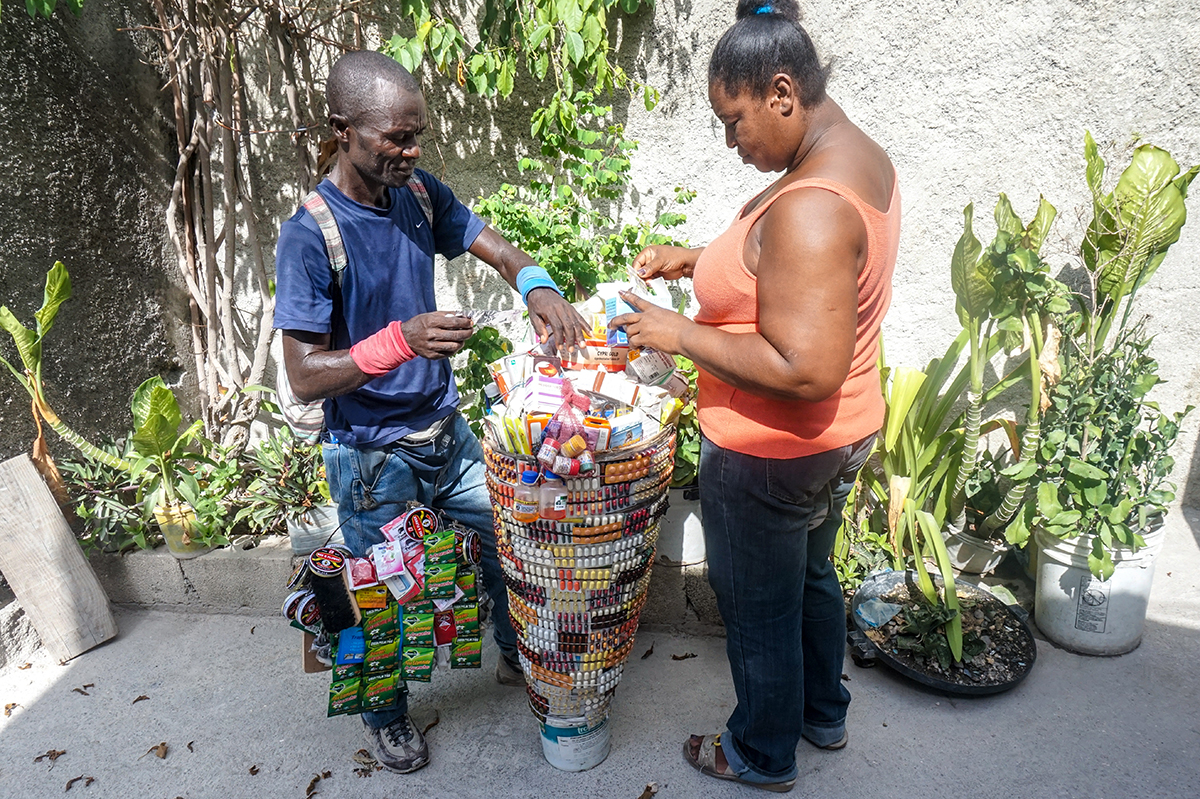
(Anne Myriam Bolivar, GPJ Haiti)
Many people use the word “chemist” loosely to describe anywhere medicine is sold, but there is a real difference worth understanding. Patent and proprietary medicine vendors (PPMVs), registered with bodies such as the Nigerian Association of Patent and Proprietary Medicine Dealers or state groups like the Lagos State Medicine Dealers Association, operate from fixed shops and are supervised, at least on paper, by the Pharmaceutical Council of Nigeria. These vendors have gone through some form of registration and training, unlike the separate group of sellers who hawk medicine on the street without licences and without meeting the council’s training or location requirements.
Roadside and open-market drug hawkers sit entirely outside this system. They carry stock in baskets, trays or motorcycle panniers, with no fixed address, no protection from heat for temperature-sensitive drugs, and no accountability if something goes wrong. If a batch turns out to be fake, there is usually no shop to return to and no licence number to report.
How big is Nigeria’s fake drug problem?
The true scale of substandard and falsified medicine in Nigeria is hard to pin down, and estimates vary between agencies. Nigerian regulators say more than 70 percent of the drugs consumed in the country are foreign imports, and NAFDAC has previously admitted that roughly half of those imports are fake. Other assessments put the figure much lower, and the National Agency for Food and Drug Administration and Control (NAFDAC) itself has pushed back on the higher numbers. Whichever estimate is closest to reality, recent enforcement activity shows the problem is far from solved.
In June 2026, NAFDAC marked International Anti-Counterfeit Month by reporting that pharmaceuticals make up a notable share of its seizures, alongside cosmetics, food and beverages, which together account for over half of all confiscated counterfeit goods (verified July 2026). Weeks later, the Nigeria Customs Service handed over narcotics, counterfeit medicines and expired pharmaceutical products worth roughly ₦53.39 billion to NAFDAC and the National Drug Law Enforcement Agency following operations at Apapa Port (verified July 2026).
Fake antimalarials are a particular worry given Nigeria’s malaria burden. A United Nations Office on Drugs and Crime study on the trafficking of medical products in the Sahel estimated that counterfeit and substandard antimalarials contribute to somewhere between 200,000 and 267,000 additional deaths across sub-Saharan Africa each year, a toll in which Nigeria’s share is likely substantial given its population size and reliance on imported medicines. Globally, the WHO puts the annual economic cost of substandard and falsified medical products, many of them sold through informal markets rather than regulated pharmacies, at around US$30.5 billion.
What can go wrong when you buy from a roadside seller
Several distinct risks stack up when medicine changes hands outside a licensed pharmacy or registered PPMV shop.
- No diagnosis, just a guess. A hawker cannot examine you, check your temperature or blood pressure, or confirm that your fever is actually malaria rather than typhoid or a viral illness. You end up treating a condition nobody has properly identified.
- Counterfeit or substandard ingredients. Falsified products may contain no active ingredient at all, the wrong active ingredient, or the wrong dose of the correct one, sometimes bulked out with inactive fillers such as cornstarch or chalk.
- Poor storage. Medicines displayed on open trays under direct sun, or carried around in a hawker’s bag for hours, lose potency far faster than drugs kept in a temperature-controlled pharmacy.
- Expired or relabelled stock. Nigerian port seizures have repeatedly turned up expired common drugs, including tramadol, oxytocin injections and vitamin B12 injections, headed for the market instead of proper disposal.
- No accountability. If a drug harms you, there is no shopfront, licence or NAFDAC registration number to trace back to the seller afterwards.
- Drug resistance. Buying loose antibiotics without proper dosing guidance, a common feature of roadside sales, adds to the growing problem of antimicrobial resistance across the region.
Research on Nigeria’s medicine retail sector backs this up. A review published in the medical literature notes that under-regulation of the patent medicine trade is linked to the spread of fake medicines, high rates of self-medication, treatment failure, antimicrobial resistance, and preventable deaths, and that risk climbs further once you move outside even the licensed PPMV system into fully unregistered roadside sales. For a full breakdown of how taking antibiotics without a prescription fuels resistance, see our earlier guide on antibiotic self-medication.
How to check whether a medicine is genuine
NAFDAC has built several tools to help ordinary Nigerians verify medicine before they take it.
- Check the registration number. Every legal drug should carry a NAFDAC number, usually starting with a prefix such as 04- for locally manufactured products or A4- for imports.
- Scratch and verify. High-risk drugs such as antimalarials and antibiotics carry a Mobile Authentication Service scratch panel. Scratching it off reveals a one-time PIN that you can text free of charge to a short code to receive an instant reply confirming whether the product is genuine.
- Search the Greenbook. NAFDAC’s online product database lets you confirm a medicine’s name, manufacturer and expiry date before you buy.
- Inspect the packaging. Blurry printing, spelling errors, faded colours, or a missing scratch panel on a drug that should have one are all warning signs.
- Buy from a fixed, licensed outlet. A registered pharmacy or PPMV shop gives you somewhere to return to, and someone accountable, if a product turns out to be substandard.
None of these steps replace an actual diagnosis. If you or a family member feels unwell enough to need medication, a consultation with a doctor, nurse or pharmacist remains the safest starting point, and nothing in this article should be read as a substitute for that professional advice. <!– BODY_END –>
Frequently asked questions
Are all roadside medicine sellers illegal in Nigeria? Yes. Registered patent medicine vendors operate from fixed, licensed shops. Hawkers who sell loose medicine from trays, baskets or motorcycles without a licence are operating outside NAFDAC and Pharmaceutical Council of Nigeria rules, no matter how genuine their stock looks.
How can I tell if antimalarial tablets are fake? Check for a NAFDAC registration number, an intact scratch panel with a working verification code, and packaging that is clean and clearly printed. If any of these are missing, or the seller has no fixed shop, treat the product with suspicion.
Why are fake drugs still common despite NAFDAC’s efforts? Counterfeiters exploit gaps in Nigeria’s import and distribution chain, including online orders from foreign suppliers and shared shipping containers that make individual consignments harder to trace. Low public awareness of verification tools also allows fake products to keep circulating.
Is it ever safe to buy medicine from a roadside seller in an emergency? It is safer to reach the nearest licensed pharmacy, PPMV shop or health facility, even if it takes a little longer. If a roadside purchase is genuinely unavoidable, verify the product immediately using NAFDAC’s tools before use and seek professional care as soon as you can.
What should I do if I suspect I bought a fake drug? Stop taking it, keep the packaging and any receipt, and report it to NAFDAC through its complaints line or email. If you have already taken the medicine and feel unwell, seek medical attention promptly.
The next time a hawker taps on your car window with a tray of tablets, remember that the few minutes saved rarely outweigh the risk of treating your family with a drug that does nothing, or does harm. Choose a licensed pharmacy or registered medicine vendor, learn to use NAFDAC’s free verification tools, and treat unusually cheap or unpackaged medicine as a warning sign rather than a bargain.
Author bio
Dr. Chimaobi Felix, MBBS Dr. Chimaobi Felix is the founder of The Healthy African and a medical doctor committed to bringing accurate, accessible health information to families across Nigeria and sub-Saharan Africa. This article is for general information only and does not replace a consultation, diagnosis or treatment plan from a qualified healthcare professional.
Also read Self-medicating antibiotics in Africa: why it is dangerous
Also read Dangers of Fake Medications in Africa
** This Article has been Reviewed by Dr. Chimaobi Felix, MBBS
⚕ Medical Disclaimer
This article is for educational and informational purposes only and does not constitute medical advice, diagnosis, or treatment. Always consult a qualified healthcare provider before making any health decisions. The Healthy African is not liable for any actions taken based on the information provided on this site.