
Amara was 24, six weeks pregnant, and certain the cramping was normal. She took paracetamol and carried on with her week. Three days later, she collapsed at a market in Onitsha and was rushed into emergency surgery with a ruptured fallopian tube and a stomach full of blood. She survived. Many young women across Nigeria, Ghana, Kenya and beyond do not.
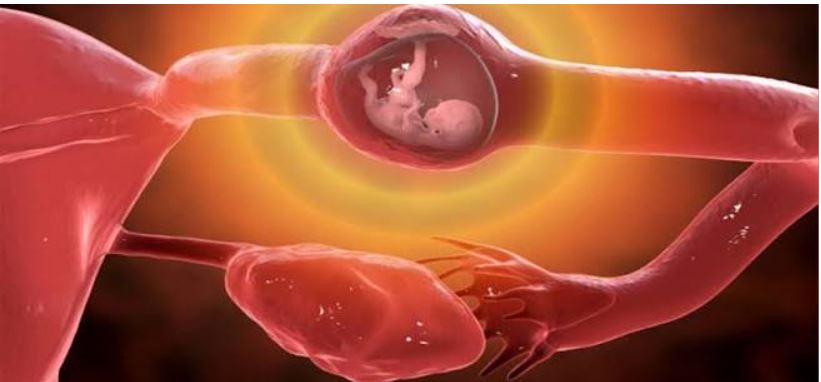
Ectopic pregnancy, a pregnancy that implants outside the womb, is one of the most under-recognised emergencies in African maternal health. An autopsy review at a district hospital in Ghana found it responsible for close to 9 percent of maternal deaths over four years (BMC study, Ghana, verified July 2026). This isn’t rare. It’s common, and it too often goes unrecognised until it’s nearly too late.
What actually happens in an ectopic pregnancy
A pregnancy begins when a fertilised egg travels from the fallopian tube into the womb (uterus) to implant and grow. In an ectopic pregnancy, the egg implants somewhere else instead, almost always inside the tube itself, and about 95 percent of cases are tubal (StatPearls, NCBI Bookshelf, verified July 2026). The tube is narrow and never built to hold a growing pregnancy, so it stretches, tears and bleeds as the pregnancy enlarges, usually between the sixth and tenth week.
An ectopic pregnancy cannot move to the womb and cannot survive to birth. There is no scenario in which the baby can be saved. That’s a hard truth, and it’s part of why many women delay care, hoping the pain settles on its own. It won’t, and waiting can cost a life.
Why so many cases are caught too late
Early on, an ectopic pregnancy can feel like an uncomfortable but ordinary early pregnancy. Mild one-sided pain, light spotting and nausea point just as easily to a threatened miscarriage, a urinary infection or malaria, which is why the condition often slips past a first consultation. Hospital-based studies across the region put the incidence anywhere between 1 in 60 and 1 in 250 pregnancies, and the true burden is probably higher still, since many rural cases are never scanned or recorded at all (African Health Sciences, Gambia, verified July 2026).
Common early warning signs include:
- Lower abdominal or pelvic pain, often worse on one side
- Vaginal bleeding or spotting that feels different from a normal period
- A missed period alongside a positive pregnancy test
- Pain at the tip of the shoulder, a specific sign of internal bleeding
- Dizziness, fainting or feeling unusually weak
- Discomfort passing urine or stool
Who is more likely to have one
Around half of all cases occur with no identifiable risk factor, so a clean history is never a guarantee. Even so, certain things raise the odds:
- A previous ectopic pregnancy
- Past pelvic infection or pelvic inflammatory disease, often linked to an untreated sexually transmitted infection
- Previous tubal or pelvic surgery
- Falling pregnant while an intrauterine device (IUD) is in place
- Smoking
- A history of infertility or fertility treatment
- Maternal age over 35
When it turns into a life-threatening emergency
Some symptoms mean you should get to a hospital immediately, not after “resting a little”:
- Sudden, severe abdominal pain
- Heavy vaginal bleeding
- A racing heartbeat, low blood pressure or fainting
- Pale, clammy or cold skin
- Severe shoulder pain occurring together with abdominal pain
These point to a ruptured tube and internal bleeding, a genuine obstetric emergency. Go straight to the nearest hospital that can operate, not a chemist or a clinic without theatre facilities.
Getting diagnosed early
Diagnosis relies on two tools: a blood test measuring beta-human chorionic gonadotropin (hCG), the pregnancy hormone, and a transvaginal ultrasound scan to locate the pregnancy. When hCG levels fail to rise as expected, or a scan shows no pregnancy in the womb despite a positive test, doctors move to investigate before rupture can occur (narrative review, MDPI, verified July 2026). The catch across much of sub-Saharan Africa is access. Quantitative hCG testing and ultrasound are often only available in urban tertiary hospitals, so rural women can go weeks without the scan that would have caught the problem early.
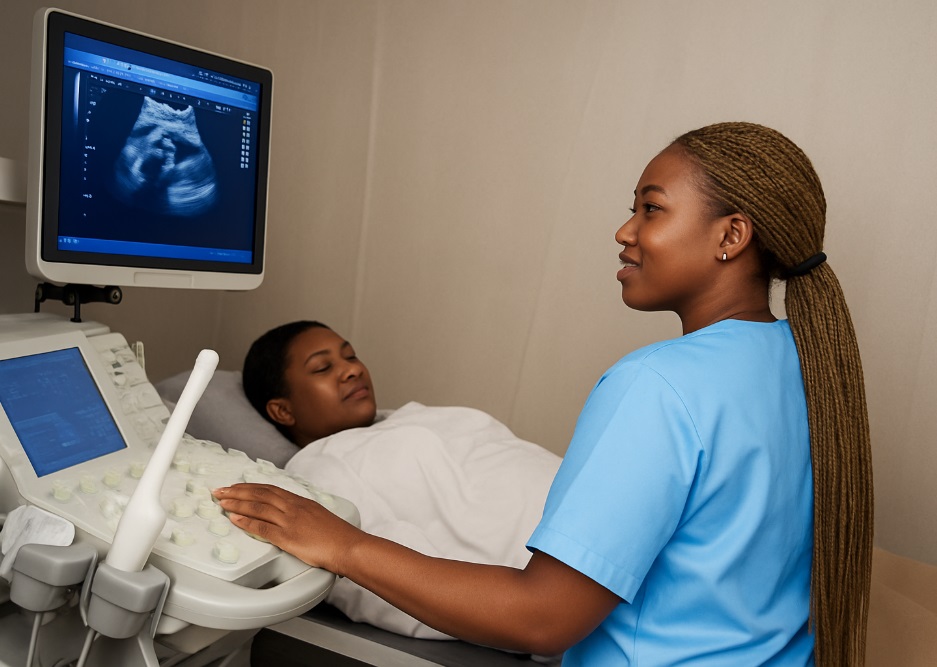
If you’re pregnant and notice any unusual pain or bleeding, don’t try to self-diagnose from a symptom list, including this one. See a doctor or midwife promptly, since only an examination can tell you what’s going on.
Treatment: medicine or surgery
Not every case needs an operation. Caught early, before rupture, with a low hCG level, doctors can sometimes use methotrexate, a medicine that stops the pregnancy tissue growing so the body reabsorbs it over several weeks (StatPearls, NCBI Bookshelf, verified July 2026). This spares the tube, though it needs repeat blood tests to confirm the hCG level is falling.
Once the tube has ruptured, surgery is the only safe option. Surgeons remove the tube (salpingectomy) or remove just the pregnancy (salpingostomy), by laparoscopy (keyhole surgery) where equipment allows, or open surgery where it doesn’t. Both offer similar odds of a future healthy pregnancy.
Why the risk runs higher for African women
Nigeria alone accounts for more than a quarter of the world’s maternal deaths, and a Nigerian woman faces roughly a 1 in 19 lifetime risk of dying from a pregnancy-related cause, against 1 in 4,900 in the wealthiest countries (Healthy Newborn Network, Nigeria country profile, verified July 2026). Ectopic pregnancy sits inside that statistic largely because of delay: recognising something is wrong, reaching a facility that can scan and operate, then securing blood and theatre space. A shortage of blood for transfusion and working ultrasound machines can turn a survivable emergency into a fatal one. For more on managing blood loss after childbirth, see our earlier guide on postpartum haemorrhage.
Frequently asked questions
Can an ectopic pregnancy turn into a normal pregnancy if I just rest? No. An ectopic pregnancy cannot relocate to the womb, however much you rest, and it will not become a healthy pregnancy. It needs medical or surgical treatment, so see a doctor rather than waiting it out.
How early can an ectopic pregnancy be detected? With a blood hCG test and a transvaginal ultrasound, many cases can be identified from around five to six weeks of pregnancy, especially if you get checked as soon as a positive test comes with any pain or bleeding.
Will I be able to get pregnant again after an ectopic pregnancy? Most women go on to have a healthy pregnancy afterwards, even after losing one tube, because the remaining tube can usually still release eggs. Odds are somewhat lower after more than one ectopic pregnancy, so your doctor may suggest closer monitoring next time.
Can a pregnancy test still be positive with an ectopic pregnancy? Yes. The test stays positive because the placenta still produces hCG, even though the pregnancy isn’t in the womb. A positive test never rules out an ectopic pregnancy, so pain or bleeding alongside it always needs checking.
If you’re pregnant, or think you might be, and something about the pain or bleeding feels wrong, don’t wait to see if it settles. Get to a health facility that can run a pregnancy hormone test and a scan today. Recognising an ectopic pregnancy early is the difference between a short outpatient treatment and an emergency operating table.
Also read Postpartum depression in African women: signs families often miss
** This Article has been Reviewed by Dr. Chimaobi Felix, MBBS
⚕ Medical Disclaimer
This article is for educational and informational purposes only and does not constitute medical advice, diagnosis, or treatment. Always consult a qualified healthcare provider before making any health decisions. The Healthy African is not liable for any actions taken based on the information provided on this site.