
Picture a 43-year-old shop owner in Nairobi. She feels more tired than usual, has put on weight around the middle over the past two years, and visits a clinic once or twice a year for malaria or a chest infection. She has never had a fasting blood glucose test. She does not know it yet, but she may be among the millions of Africans whose blood sugar has been quietly rising for years. According to the International Diabetes Federation’s 2024 Diabetes Atlas, four in five adults with diabetes in Africa are undiagnosed, the highest proportion of any region in the world. Many of them were pre-diabetic first and never knew it.
Pre-diabetes is a condition in which blood glucose (blood sugar) sits above the normal range but below the threshold for a type 2 diabetes diagnosis. It produces almost no symptoms, passes undetected without a blood test, and is reversible with the right changes. Yet the number of adults with pre-diabetes across Africa is projected to reach 84.7 million by 2030, according to International Diabetes Federation estimates, and most of those people have no idea they are in it.
What is pre-diabetes?
Pre-diabetes describes a state of blood glucose regulation that sits between normal and diabetic. Two main forms exist. Impaired fasting glucose (IFG) means blood sugar after an overnight fast is elevated but has not yet crossed the diabetes threshold. Impaired glucose tolerance (IGT) means blood sugar rises more than expected two hours after consuming glucose.
Both forms are rooted in insulin resistance, where the body’s cells respond poorly to insulin, the hormone that moves glucose from the bloodstream into tissues. The pancreas tries to compensate by producing more insulin, but this cannot continue indefinitely. Without any change in lifestyle or weight, many people with pre-diabetes progress to type 2 diabetes within five to ten years. A meta-analysis published in Frontiers in Public Health found that people with pre-diabetes have up to six times the risk of developing type 2 diabetes compared with those who have normal blood glucose. Pre-diabetes also independently raises the risk of heart disease and stroke, meaning harm is already accumulating long before a diabetes diagnosis is made.
Why pre-diabetes goes undetected across Africa
The most important reason is the absence of noticeable symptoms. Unlike full diabetes, pre-diabetes does not reliably cause thirst, frequent urination, or unexplained weight loss. Most people feel perfectly well and have no reason to request a test.
The second reason is a gap in routine screening. A 2025 community-based study across sub-Saharan Africa, published in Frontiers in Endocrinology, found that 16.8 per cent of participants had pre-diabetes or undiagnosed diabetes, yet almost none had presented to a clinic because of it. That same research pointed to a testing limitation worth knowing: relying solely on a fasting plasma glucose test missed 34 per cent of pre-diabetes cases that a two-hour oral glucose tolerance test would have detected. Even people who do get tested can be falsely reassured.
A third factor is the weight of competing health priorities. Across the continent, healthcare systems already managing malaria, tuberculosis (TB), and HIV rarely reach the slow, silent threat of rising blood sugar until it has become overt disease.
Who is at highest risk?
If you have any of the following, speak to a doctor about getting your blood sugar tested:
- Age 35 or older
- A parent or sibling with type 2 diabetes
- Overweight or obesity, particularly with excess weight around the waist
- Physical inactivity or a predominantly sedentary lifestyle
- A previous diagnosis of gestational diabetes (diabetes during pregnancy)
- High blood pressure (hypertension)
- Elevated cholesterol or triglyceride levels
A 2021 systematic review of pre-diabetes in Nigeria estimated that approximately 15.8 million Nigerians are living with pre-diabetes under American Diabetes Association (ADA) criteria, meaning one in every three Africans with pre-diabetes is a Nigerian. Rapid urbanisation, growing sedentary work, and diets shifting toward refined carbohydrates and sugary drinks are accelerating this trend across the continent.
How is pre-diabetes diagnosed?
Three standard tests are used, all available at most secondary-level facilities across Nigeria, Kenya, Ghana, South Africa, and other sub-Saharan African countries:
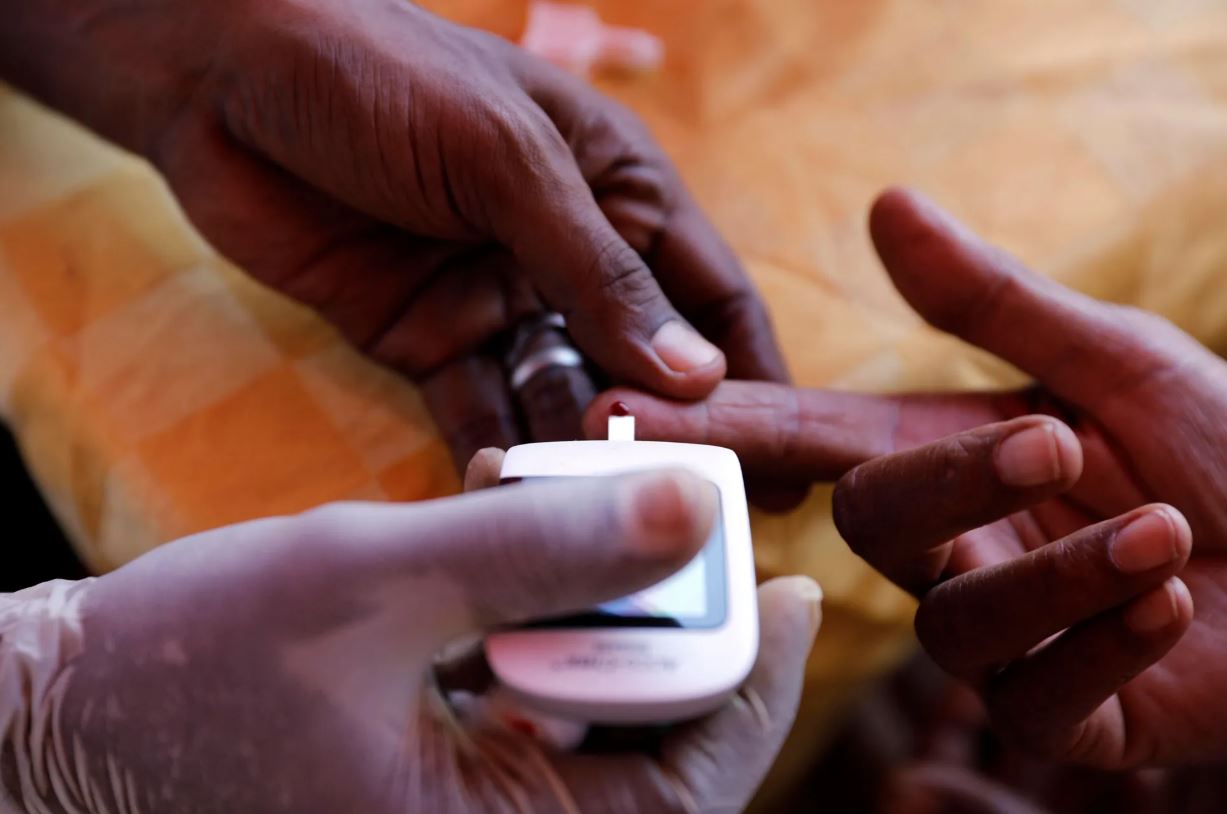
- Fasting plasma glucose test: Blood is drawn after at least eight hours without food. A reading of 100 to 125 mg/dL (ADA criteria) or 110 to 125 mg/dL (WHO criteria) indicates pre-diabetes.
- Two-hour oral glucose tolerance test (OGTT): Blood is measured two hours after consuming a standard glucose drink. A result of 140 to 199 mg/dL indicates impaired glucose tolerance.
- HbA1c test: A blood test that does not require fasting. An HbA1c reading of 5.7 to 6.4 per cent indicates pre-diabetes under ADA criteria.
A clinical note: HbA1c results can be unreliable in patients with haemoglobinopathies such as sickle cell disease, which is common across West and Central Africa, as well as in those with iron-deficiency anaemia. In these patients, the OGTT is the more dependable option. These tests require a doctor’s interpretation and should not replace a conversation with a qualified medical professional.
Pre-diabetes is reversible
This is the part that changes everything. Unlike type 2 diabetes, which requires ongoing management, pre-diabetes can be reversed in many people through sustained lifestyle changes.
Both the WHO and the ADA recommend that people with pre-diabetes aim to lose five to seven per cent of their body weight and accumulate at least 150 minutes of moderate physical activity per week. In practice, that might mean a 30-minute brisk walk five days a week, replacing sugary drinks with water, and reducing portions of white rice, white bread, or eba. A 2025 systematic review in the Journal of Medical Internet Research found that face-to-face lifestyle programmes consistently reduced how often pre-diabetes progressed to type 2 diabetes. Where lifestyle change alone is not sufficient, metformin, an inexpensive and widely available medication, is recommended by some clinical guidelines for high-risk individuals.
For a broader look at how blood pressure and blood sugar interact to drive cardiovascular risk in younger Africans, see our earlier guide on hypertension in young Africans.
FREQUENTLY ASKED QUESTIONS
Can I have pre-diabetes with no symptoms at all?
Yes, and this is the most important thing to understand about the condition. The vast majority of people with pre-diabetes feel entirely well. There are no reliable physical signs you can notice at home, which is why a blood glucose test is the only dependable way to find it. Waiting until you feel unwell often means losing the window when reversal is most achievable.
What blood sugar level means I have pre-diabetes?
Under ADA criteria, a fasting blood glucose of 100 to 125 mg/dL or an HbA1c of 5.7 to 6.4 per cent indicates pre-diabetes. The WHO uses a slightly higher fasting threshold of 110 to 125 mg/dL. Your doctor will advise which standard applies in your clinical setting.
Will pre-diabetes definitely turn into type 2 diabetes?
Not necessarily. Pre-diabetes is a risk state, not a certainty. Without any change, many people with pre-diabetes progress to full diabetes over the following years. With consistent changes to diet, physical activity, and weight, many others return their blood sugar to a normal range entirely.
How often should I get tested for pre-diabetes?
If you have any of the risk factors listed above, the ADA and WHO both recommend testing at least every one to three years. If your result is borderline or your doctor considers you at high risk, annual testing is the more cautious approach. Do not wait for symptoms to appear, because with pre-diabetes, they usually do not.
Pre-diabetes is the last point in the journey where the biology is still working in your favour. If you are over 35, carry extra weight, or have a family history of diabetes, requesting a simple blood glucose test at your next clinic visit could be one of the most useful things you do this year.
Read our article on Healthy African Meal Plans for Managing Diabetes: A Professional Guide
Read our article on Living with Diabetes Mellitus in Africa
** This Article has been Reviewed by Dr. Chimaobi Felix, MBBS
⚕ Medical Disclaimer
This article is for educational and informational purposes only and does not constitute medical advice, diagnosis, or treatment. Always consult a qualified healthcare provider before making any health decisions. The Healthy African is not liable for any actions taken based on the information provided on this site.